There is no single best AI browser game: the useful question is what type of feedback loop you want. A model that guesses, a narrator that replies and a game coded with AI can feel entirely different.
01 / For short sessions: instant feedback
Choose a sketch or word experiment when you want a visible result within a minute. Quick, Draw! has a clear time-boxed interaction and illustrates recognition errors as part of the fun. Semantris turns language associations into a score or move rather than a lengthy text output.
These experiments are good for understanding the difference between probabilistic pattern matching and a hard-coded correct answer. They are less suitable if you want character development or persistent campaigns.
02 / For curiosity: combinatorial play
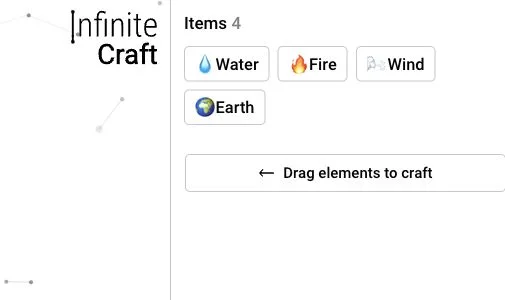
Infinite Craft begins with a handful of elements and asks you to make new things from pairs. There is no need to master a combat system, but it is easy to lose track of your discoveries. Its creator site is the reliable entry point; unofficial versions may implement different rules.
Sandbox interactions reward experimentation and the occasional absurd result. An outcome generated by a model is not a guarantee of factual or logical consistency.
03 / For dialogue: stories or interrogations?
Interactive fiction rewards improvisation and character work. AI Dungeon and Stage Whisper emphasize different controls around generated narrative and continuity. KathaaVerse makes the underlying book or film an explicit starting frame. Some of these services ask for accounts or model keys.
Detective games such as Everyone’s a Detective and Jack & Mani give your questions a narrower purpose. Ask about an alibi, cross-check a timeline and build a case. Verify that the game has an evidence system; unrestricted chat alone is not the same as solving a fair mystery.
04 / For longer play: inspect the rules
An AI dungeon master can embellish a story, but the player may still need dependable HP, dice and movement rules. Kith Moot explicitly separates storytelling from resolved rolls. If you want a campaign, look for saves, rollback, character state and clear cost boundaries before investing an evening.
Before creating an account, read how the developer stores prompts and what happens to your content. Do not assume a story is private because it does not appear on a public gallery.
05 / For ordinary arcade play: read the creation label
Some of the most interesting AI-era browser games are not generative during play. Creators use AI tools to speed up prototyping and produce a conventional platformer, shooter or strategy game. That is the AI-assisted label, and it tells you something about development rather than gameplay.
Use our category and AI-type filters together. They prevent a misleading comparison between a neural recognizer and a physics platformer while leaving room for both kinds of creativity.
Editorial note: all references to specific games are based on the publishers’ documented features, not personal playtest claims. See each listing for its source links and access limitations.